“Don’t lift anything”, “Avoid anything intense,” “Just sit and rest”
How many times have you heard comments like these? Unfortunately, there are too many myths surrounding pregnancy and exercise.
With all that advice floating around, it’s no wonder so many expecting moms skip physical activity altogether. But the truth is, staying active – safely – can actually make pregnancy more comfortable and even help with labor and recovery.
This is where pregnancy Pilates Toronto can help you out. Unlike other workouts, Pilates uses gentle, controlled movements to strengthen your core, support your changing muscles and improve posture – all without putting extra strain on your body.
Keep reading to see how Pilates can be safe and beneficial at every stage of pregnancy.
First Trimester
Weeks 1-13
A lot of moms describe the first trimester as the worst – with fatigue, nausea and heightened sensitivity making even simple tasks feel like a major effort.
This is how you should approach Pilates during these early weeks to stay active – safely and comfortably.
1) Prioritize Low Impact Movements
This isn’t the time to push intensity. Choose slow, controlled Pilates movements that support your core, improve posture and reduce tension in your back and hips – without putting pressure on your belly. Keep each movement small and steady and stop immediately if something doesn’t feel right.
FYI ~ Recent research shows this approach is not only safe but helpful. According to a 2024 review – practicing Pilates during pregnancy can strengthen your core, ease common pregnancy discomforts and even shorten labor.
2) Avoid Certain Positions
Avoid staying flat on your back for too long, as it can limit healthy blood flow. It’s also best to skip deep twists and intense ab work. A trained pregnancy Pilates Toronto instructor can adjust regular Pilates exercises so they feel safe and supportive during early pregnancy – while still helping you stay active.
3) Get Medical Clearance and Listen to Your Body
Before starting or continuing Pilates, check in with your gynecologist – especially if your pregnancy is considered high risk or you’ve had complications in the past.
Even after getting the green light, pay attention to how your body feels. In case of fatigue, nausea or dizziness – don’t push yourself. Short, 20–30 minute sessions a few times a week are usually more effective and than longer, exhausting workouts.
Wondering which Pilates exercises are safe for each stage of pregnancy? Check out this guide on Pregnancy Pilates for New Moms: Safe Moves by Trimesters
Second Trimester
Weeks 14 – 27
By the second trimester, many expectant moms start to feel more energetic and steady compared to the first few weeks. This is why it’s called the “honeymoon phase” of pregnancy – and is the best stage to practice Pilates.
1) Focus on Core and Pelvic Floor
Now’s a great time to really work on your core and pelvic floor. These gentle exercises help support your growing belly, ease back and hip tension, keep your posture in check – while also making postpartum recovery a bit smoother.
FYI ~ According to a 2025 study – women who practice Pilates during pregnancy experience better sleep quality, physical mobility and overall quality of life.
2) Use Props for Support
During this time, your belly starts to grow bigger – shifting your center of gravity and affecting your balance more than you might expect. That’s where props can really help. Using tools like stability balls, resistance bands or small pregnancy Pilates Toronto rings gives you extra support and stability as your body changes.
3) Be Mindful of Your Range of Motion
As your pregnancy progresses – hormones like relaxin make your joints and ligaments more flexible. While that might sound like a good thing, it actually increases the risk of overstretching. So keep your range of motion in Pilates smaller – especially during twists or rotational exercises and focus on exercises that build stability rather than flexibility.
Third Trimester
Weeks 28 – Birth
By the third trimester, your body goes through dramatic changes. Your belly is bigger and heavier, your hips have widened and even simple tasks – like getting up from a chair or walking around the house can feel extremely tiring.
1) Shift Your Goal From Strength to Comfort
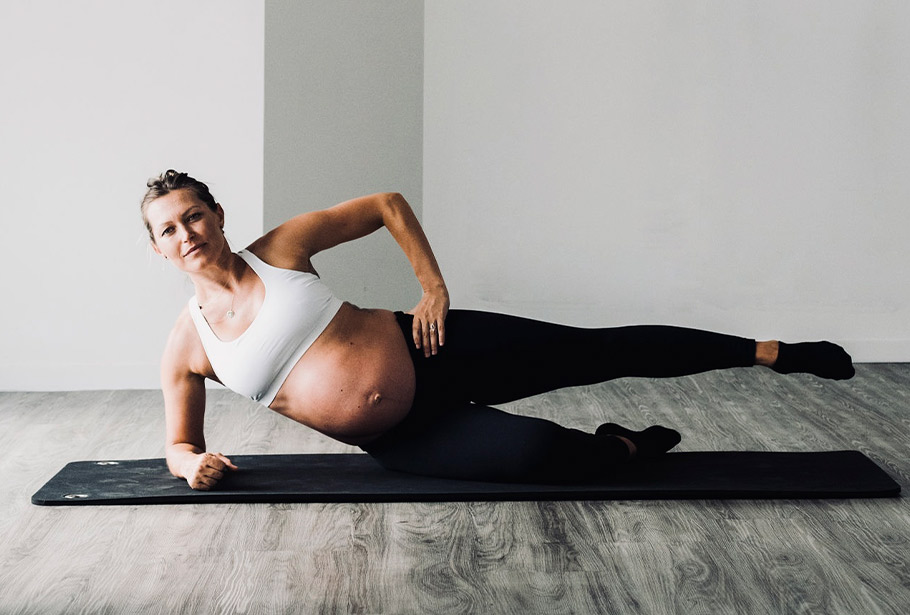
At this stage, trying to push too hard can easily cause back or hip strain, joint discomfort or even affect your balance. So instead, focus on gentle, supportive movements during pregnancy Pilates Toronto – like slow hip openers, seated stretches and side lying exercises – that help keep your muscles active, relieve tension in your lower back and pelvis and prepare your body for labor.
2) Focus on Breathing
Breathing exercises are really helpful in the third trimester. Taking slow, deep breaths can ease tension in your back, hips and chest while helping you stay calm and more in control – both during your workouts and later in labor.
3) Keep Core and Pelvic Floor Work Light
Even in the final weeks, gently engaging your core and pelvic floor can be very helpful. These exercises support your belly, improve circulation and can make postpartum recovery a bit easier. Just remember to keep the movements light and gentle.
FYI ~ According to a 2024 – 2025 systematic review – Pilates during pregnancy is linked to shorter overall labor and less pain during delivery, compared to no exercise at all.
The Difference of a Great Pilates Studio
Pregnancy Pilates Toronto is a great way to support your body, but it needs to be done carefully. Your body changes with each trimester, so what feels comfortable at 12 weeks might not feel the same at 32. That’s why it’s important to work with instructors who can adjust exercises for every stage of pregnancy.
At Body Cadence Pilates, our instructors guide you carefully, adapting each movement to your trimester, comfort and what your body needs. With small classes just for pregnant women – we make sure everyone gets the attention and support they need to move safely and feel confident throughout their pregnancy.
Book your slot today!
FAQs
1) How many times a week should I do Pilates when pregnant?
If you’re just starting, keep the intensity low – with 2 to 3 Pilates sessions a week. Then, as you get used to it, you can gradually pick up the pace to a comfortable, moderate level.
2) When should I stop prenatal Pilates?
Pay close attention to your body. Stop and rest if you notice bleeding, dizziness, unusual pain or just feel worn out. And if your pregnancy is high risk – check with your doctor before continuing.
3) Is reformer Pilates safe in the second trimester?
Absolutely! Reformer Pilates can support your growing belly very well. Props like springs, straps and stability balls make exercises safe and a trained instructor will adjust moves to protect your lower back and joints.
4) Can I do the downward dog while pregnant?
Definitely! Downward dog is great for stretching your back and shoulders. Just keep your knees slightly bent and your feet a bit wider for balance and avoid it if you have high blood pressure, placenta issues or feel lightheaded.
5) Can Pilates get rid of mommy pooch?
Yes! Working on your abs and pelvic floor muscles can help tone your belly over time and even support postpartum recovery. Just be careful and skip crunches while you’re pregnant – gentle core work is all you need.
