Are you trying to choose between Pilates and yoga but unsure which one is right for you? These two are often compared to each other as they are both mind-body exercises, low impact that enhance overall wellness. Although there are some similarities, their advantages and emphasis are very distinct.
Adults are attracted to pilates and yoga for the benefits of strength, mobility and movement without heavy exercise. Both practices have great physical benefits, whether you’re sitting for long periods of time, dealing with some aches or pains, or looking for a better way to get around.
The one that is “best” will depend on what your goals are. Some want more flexibility, balance and relaxation, others wish for better core muscles and functional movement.
What Is Pilates?
Pilates is an exercise that focuses on core stabilization, controlled movement and alignment of the body. The deep muscles supported by all the exercises make it extremely effective for those who suffer with back pain, bad posture, or injury.
It works across two main formats: mat-based and reformer-based. Mat pilates is performed with the use of one’s own body weight to develop strength and control. Reformer pilates adds spring resistance through a machine that challenges your stability. Both develop the strength that improves how your body moves. Here is what Pilates focuses on:
- Developing core and stabilizing muscle strength across the body.
- Educating the body to move in the correct and controlled patterns.
- Enhancing posture and minimizing stress on joints and the spine.
- Developing functional strength into everyday movement.
- Reformer and mat types for every fitness level.
What Is Yoga?
Yoga is a mind-body practice that involves physical postures, breathing exercises and mindfulness and meditation to enhance flexibility, lower stress and promote wellness. Depending on your preference, it represents dozens of styles, ranging from slow and soothing to fast and physically demanding.
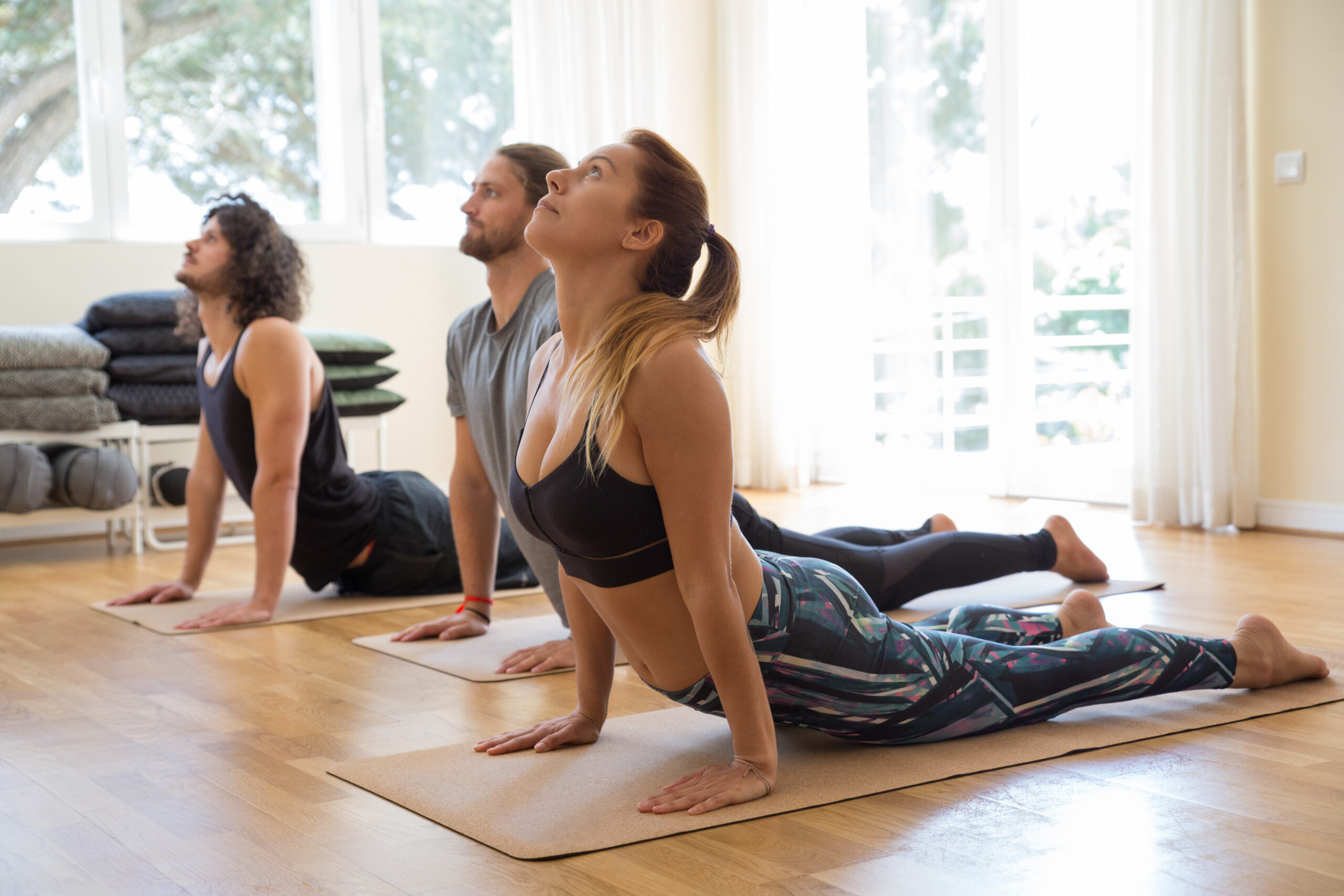
Yoga is different to pilates as it focuses on flexibility, relaxation and mind-body connection. Breathwork is not secondary, most styles focus on holding poses for longer in order to improve flexibility and concentration, by:
- Building flexibility and range of motion with prolonged postural positions.
- Linking breath with movement to help manage stress.
- Developing mental concentration, awareness and relaxation in addition to physical effects.
- Enhancing whole-body balance, co-ordination and mobility skills.
- Helping to maintain emotional health and reducing stress through practice.
Similarities Between Pilates and Yoga
Pilates and yoga have many similarities, which is why people often compare them when choosing a workout. They’re both considered mind-body exercises, both are low impact for most fitness levels and both demand a certain concentration that most exercise routines need in the gym don’t. Here is where they overlap:
- Both promote mind-body awareness: Both exercises help you be aware of how your body moves.
- Both are low-impact: They don’t put stress on joints and they don’t require any previous fitness experience.
- Both support flexibility and mobility: Every time you practice either, your body will be more mobile.
- Both improve posture: When the postural muscles are engaged consistently, both become better aligned.
4 Ways Pilates and Yoga Differ
Despite their similarities, pilates and yoga take distinctly different approaches to what they train and how they get there. With these differences in mind, it’s easier to choose between them according to your body’s needs:
- Core focus: All Pilates exercises focus on the deep core muscles.
- Movement style: Pilates is based on repetition and precision; yoga is based on holding and flowing.
- Strength development: Pilates develops functional strength, yoga develops postural endurance.
- Equipment usage: Pilates requires reformers and resistance equipment, while yoga requires just a mat.
Which Is Better for Core Strength?
Pilates wins on core strength development. Every exercise targets the deep stabilizing muscles of the core, including the transverse abdominis, multifidus and pelvic floor, muscles most people never reach in a standard workout. A 2021 study published in the Journal of Bodywork and Movement Therapies also showed that pilates effectively enhances core strength and spinal stability.
Yoga engages the core in balanced poses and holds, such as plank position and boat position, but usually core engagement is used to facilitate a pose. In Pilates, strengthening the core is the entire point, which is why core-specific results are more measurable.
Which Is Better for Mobility and Flexibility?
Yoga has the edge on flexibility. Sustained yoga creates the deep connective tissue stretch that improves range of motion over time that Pilates movements can’t. If tight hamstrings, hips, or a stiff thoracic spine are your main concern, yoga addresses that.
Pilates focuses more on mobility than flexibility. Mobility means your body moves freely and with control through its full range. A study in the Journal of Exercise Rehabilitation revealed that Pilates training enhances functional mobility and movement quality that carries into everyday life.
Why Group Pilates Classes Are Popular Among Active Adults
Group pilates provides progression, expert instruction and the motivation that comes with training with others who have similar objectives and that you don’t find in solo training. For all Canadians who are looking for core strength and improved movement, group classes are a great way to stay consistent and get results, with:
- Expert instruction: Your form is corrected by an expert during each lesson.
- Supportive environment: It is easier to show up consistently when practising with others.
- Accountability and consistency: It’s much more difficult to miss a scheduled session than an individual workout.
- Progressive development: Classes are sequential, with strength and mobility progressing consistently.
Learn More About Group Pilates and Start Building Core Strength and Improving Mobility!
Both pilates and yoga are beneficial and you must choose the one based on your objective. Pilates provides more specific and quantifiable results; it’s better for core strength and functional mobility. Yoga serves a different purpose in an active wellness routine for deep flexibility and stress relief.
Here is how to get started with group Pilates:
- Attend your first class: No experience is required. Group Pilates is suitable for everyone.
- Work with qualified instructors: Each class offers individualized instructions and corrections, ensuring that you strengthen properly.
- Stay consistent: 4-8 weeks of regular attendance is when most people start to see changes in strength and movement.
Check out our group pilates classes and services at Body Cadence and discover which session format is best for you. Our classes are progressive, instructor-led and designed for adults who wish to feel stronger and move better. Book your first session today and take the first step toward a stronger core and better mobility.
Frequently Asked Questions (FAQs)
Q1. What kind of workout is Pilates?
Pilates is a low impact, controlled strength and mobility exercise focusing on deep core muscle exercises, improving posture and alignment and building functional physical strength.
Q2. Why do people prefer Pilates over yoga?
When it comes to core strength, postural correction or injury rehabilitation, people opt for Pilates over yoga which is more about flexibility and mindfulness.
Q3. What are the benefits of group Pilates?
Group Pilates offers expert instruction, instant form corrections, accountability and a structured program designed to continuously enhance core strength, posture and mobility.
Q4. What are the main differences between Pilates and yoga?
Pilates is about core stabilization, controlled movement and functional strength. Yoga focuses on flexibility, breathing, being attentive and relaxing by holding poses and moving in sequences.
