
You’ve probably heard both claims about Pilates… that it melts weight away or that it’s “just stretching.” Well, what is the truth? Pilates can be a great way to strengthen your body, help your body move better and to manage your weight; however, it is not magic. It’s not quite so simple.
The advantages are out there, however it’s important to make regular practice. Pilates targets various muscle groups to strengthen and control. It can also help you to become more flexible and better posture. Group classes can also help to make exercise more enjoyable… It can be helpful to have an instructor leading the class and other people working along with you to stay motivated and on track with your exercise.
But what impact does group Pilates really have on your weight loss and toning aspirations? So how does it fit in to the fitness routine? Let’s explore the benefits of Pilates and how regular practice can help you make progress.
How Pilates Supports Weight Loss and Body Toning
Pilates strengthens, corrects movement patterns and fosters good posture. While Pilates is not a weight-loss regimen, these modifications can help create a more toned and sculpted appearance. Consider it as a piece of your practice, not the entire practice.
So, let’s get some clarity on the meaning of “toning”. It’s commonly used to describe the appearance of tighter muscles, improved posture or more defined muscles. While muscle development can help with that appearance, changes in body fat require a number of other factors.
During Pilates, Your whole core, hips, legs, back and shoulders are linked during Pilates. Your core stabilises your body and other muscles help to move you. You’re not just stretching… you’re exercising under control in a way that works your various muscles.
The slower speed is for a reason, as well. Practicing movements is important to build muscular endurance; this can make everyday activities easier. Ever had to sit for many hours at a desk and feel your back tiring? Strengthening the body can provide increased support in daily activities.
After some time, you might find some movements easier or your posture might be more comfortable. Pilates can also be used as part of your walking and resistance training program, offering alternative ways to exercise without relying on one mode to be all things.
What does the research say? A 2021 meta-analysis published in Frontiers in Physiology examined Pilates trials involving adults with overweight or obesity. Researchers found average reductions in body weight, BMI and body fat percentage, but not in waist circumference or lean body mass.
What does the research say? In 2021, the authors of a meta-analysis published in Frontiers in Physiology reviewed studies of Pilates for overweight and obese adults. Average reduction in body weight, BMI and body fat percentage was found, but there was no reduction in waist circumference and lean body mass.
That’s encouraging… but the details matter. The research has been carried out on overweight or obese adults and yielded different outcomes. They can’t promise the same results for everybody. Momentum and results can vary depending on starting point, eating habits and overall activity and consistency.
Which Pilates Exercises Help Build Strength and Improve Body Definition?
Each exercise in Pilates targets a variety of muscles and a session can involve core work, lower body workouts, upper body exercises, and combined full body sequences. The specific exercises will be specific to your class and ability, but you can find exercises like these:
- Core-Focused Movements: The Hundred and appropriate Dead Bug variations can provide a challenge to core control and stability.
- Lower-Body Strength: Bridges and side-lying leg exercises target the glutes, hips and legs.
- Upper-Body Conditioning: Arm and shoulder movements for strength and control.
- Full-Body Sequences: Coordinated Exercises means that there are multiple muscle groups that are used in one exercise.
- Controlled Repetitions and Alignment: Slow movements allow you to concentrate on technique and not rush through each repetition.
One thing to keep in mind… Your body doesn’t decide where it will lose fat. Specific exercises, such as leg lifts, will not target fat in the legs. Their benefits lie in the strength and control they provide, with overall fat changes depending on a number of factors.
The execution of each movement is important as well. A simpler version may be better suited with good alignment than a difficult version that you can’t control. Don’t force a position if it is uncomfortable or you are not certain about how it is done; ask your teacher for an adjustment.
How Often Should You Attend Group Pilates Classes for Weight Loss and Toning?
There’s no perfect number of group Pilates classes for everyone. This depends on your fitness and other activities, as well as class intensity and recovery. Even if you are new to exercising, it is best to begin at a comfortable level that won’t put too much pressure on you, but that will give you confidence in the program.
The Canadian Society for Exercise Physiology (CSEP) has published Canada’s 24-Hour Movement Guidelines, which include muscle-strengthening activities at least two times a week for adults. Depending on the muscles and movements used, Pilates can help achieve this goal, along with other appropriate exercises.
Consider the individual who has been sitting at a desk for years and is just now getting back into exercise. They may be totally different from the person who already runs several times a week and is seeking improved core control. Different people may not fit the same class… and that’s okay.
Recovery needs to be addressed as well. If you are feeling really sore after class or if you can’t seem to get out of breath, you should try a different level or more rest. Don’t push yourself each time, find a rhythm you can sustain is more useful.
Begin with a schedule that suits your week and gradually change to one you’re more comfortable with. Some classes might be better suited for your schedule and leave you less exhausted than trying to fill your calendar full.
But don’t think you need to do it all at once. With so many sessions, you can easily become enthusiastic and sign up for too much, and when life gets hectic, get bored and cancel. Allow yourself to get comfortable with the routine… you can always add on.
Why Pilates Alone May Not Deliver Your Desired Weight Loss Results
Pilates provides ample opportunities for movement, but can’t explain everything that influences body weight. How you do your workout is just as important as the workout itself. The changes you may experience can be affected by eating, daily activities, sleeping and personal factors.
There are a number of factors that can impact your progress on a day-to-day basis… such as your energy intake versus expenditure, your normal eating habits, how active you are outside of class, how often you exercise and your general health.
- Energy Expenditure: A balance between the energy you eat and the energy your body expends over time also affects your weight change.
- Nutrition Habits: Your general eating habits have an impact on whether your body receives the energy and nutrients it requires.
- Daily Activity: Walking, taking the stairs and other everyday movements add to your activity levels.
- Training Frequency: Training can be more frequent or less frequent, which can impact how active you are and how many chances you have to strengthen.
- Individual Differences: Your experience and results may vary based on fitness, sleep, health and personal factors.
This is also reflected in the 2020 clinical practice guidelines for obesity published by Obesity Canada, addressing the topic of lifestyle modification, including nutrition and physical activity. They also help promote an emphasis on health and improvements in quality of life, as opposed to simply being mindful of a number on the scale.
Consider a typical busy week… maybe you went to a class, felt great, went to a bunch of meetings for the next week or so, you ate salads between meetings, and slept poorly. You still have to work out, but it’s only part of your week. That is why it is essential that your overall habits matter.
How to Combine Group Pilates With Other Habits for Better Results
You don’t need to overhaul your entire lifestyle to support your goals. Pairing Pilates with balanced meals, regular movement, enough rest and realistic expectations can help you build a routine that’s easier to maintain. Small, repeatable changes are a good place to start, such as these:
- Balanced Nutrition: Choose a variety of nourishing foods that support your health and activity needs.
- Regular Movement: Add activities such as walking to complement your Pilates sessions.
- Recovery and Rest: Give yourself time to recover and maintain healthy sleep habits.
- Realistic Goal Setting: Set achievable goals around attendance, strength, mobility and consistency.
What might this look like in everyday life? You could attend a class one evening, take a walk during lunch another day and give yourself time to unwind before bed. Your goal might simply be to attend regularly this month… nothing complicated, just a routine you can realistically follow.
If you’re pregnant, recently postpartum, recovering from an injury or managing a health condition, speak with an appropriate healthcare professional before making significant changes to your exercise or nutrition routine. Let your instructor know about any relevant concerns, too, so they can help you find suitable movement options.
How to Measure Progress Beyond the Number on the Scale
Progress isn’t always obvious when you look in the mirror or step on a scale… sometimes, you notice it when an exercise feels easier or everyday movement becomes more comfortable. Paying attention to these changes can give you a fuller picture of how you’re doing.
For example, you might notice changes in your strength, mobility, posture or ability to attend classes consistently. If you’d like to keep track, here are a few things worth paying attention to:
- Strength and Core Control: Movements may start to feel steadier and easier to control.
- Improved Mobility and Flexibility: Everyday movements may feel more comfortable.
- Posture and Movement Quality: You may become more aware of how you sit, stand and move throughout the day.
- Clothing Fit and Body Measurements: These are optional ways to track changes, if they feel helpful to you.
- Workout Consistency and Endurance: You may find it easier to attend regularly and complete your sessions comfortably.
And if the number on the scale goes up one week… try not to panic. Body weight can fluctuate because of hydration, meals and other everyday factors. A single reading doesn’t tell you whether your fitness is improving or whether your routine is working.
You don’t have to track every measurement or turn your progress into a numbers game. Choose the signs that matter to you and leave the rest. If tracking your weight makes you anxious or overly focused on your appearance, it’s perfectly fine to skip it.
Here’s a simple habit you could try… after each class, write down one thing that felt easier and one movement you’d like to practise. Look back after a few weeks and you may notice changes that were difficult to spot from one session to the next.
Are Group Pilates Classes or Other Workouts Better for Your Goals?
Neither group Pilates nor other workouts are automatically better for everyone. It depends on what you’re working towards, what you enjoy and what fits your schedule. In fact, combining different activities can give you more variety and help you work on different aspects of your fitness.
Walking adds everyday movement and can fit into even a busy day. Resistance training challenges your muscles against added resistance, while group Pilates focuses on controlled movement, strength, posture and body awareness. Each has a different role… and they can complement one another.
Say you enjoy your Tuesday Pilates class but want to move more throughout the week. A brisk walk on another day could be a good addition. If you’d like to challenge your muscles further, resistance training may also suit your goals. You don’t have to choose just one activity.
Still unsure where to start? Think about the kind of exercise you actually enjoy. If you like guided movement and being around others, a group class may feel right. If you’d prefer more individual attention, you could explore private Pilates sessions or semi-private sessions.
Join Group Pilates Classes at Body Cadence and Work Toward Your Weight Loss and Toning Goals!
Working towards weight loss or body toning doesn’t mean you have to change everything overnight. Pilates can help you develop strength, improve movement control and build a more regular exercise routine… without expecting immediate results or perfection. What matters is finding an approach that works for you.
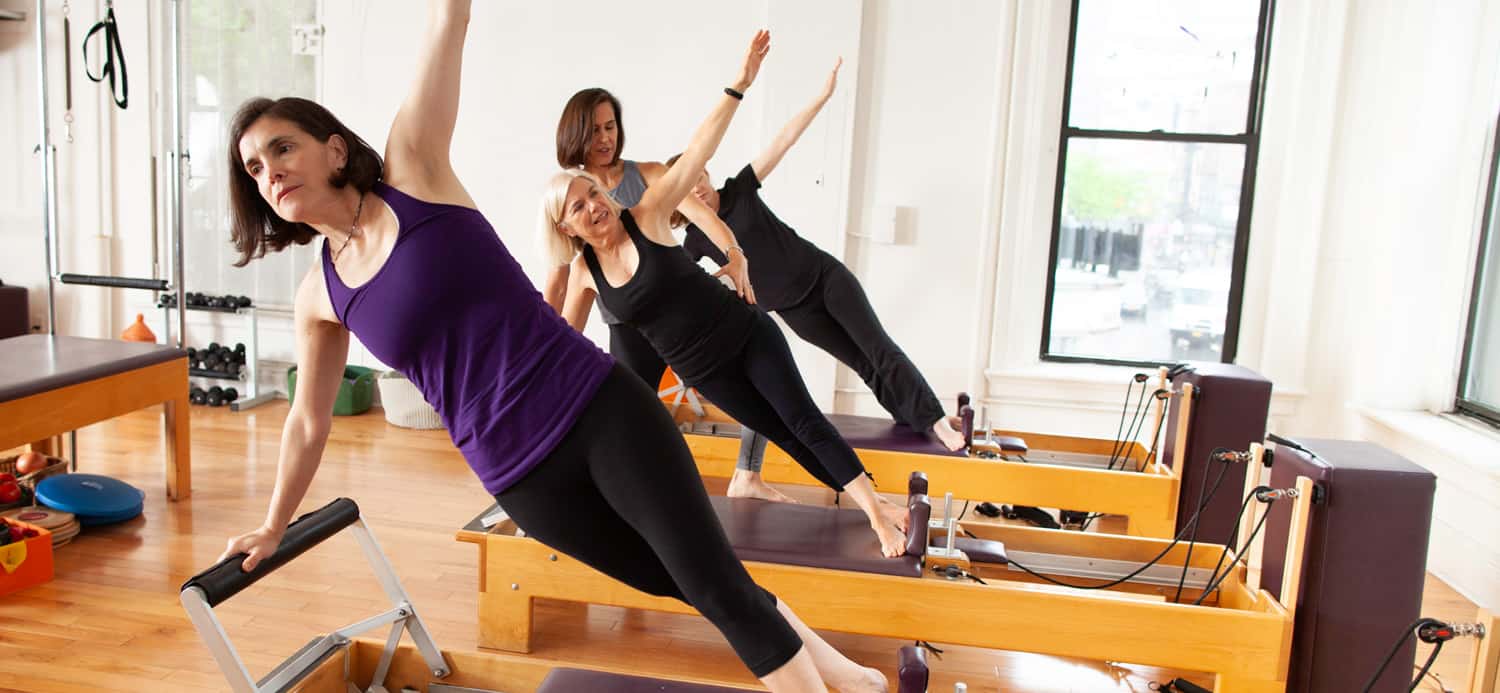
So, Body Cadence offers group Pilates classes using reformers, trapeze tables and props. You can explore the group class schedule to see which sessions fit your routine.
Ready to take that first step? Have a look at the group Pilates classes and find a session that fits your week. If you have questions, contact us or enquire about a class. You don’t need to have everything figured out before you begin… just give yourself the chance to start.
Frequently Asked Questions (FAQs)
Q1. Can group Pilates classes help with weight loss?
Yes… group Pilates classes can support weight management. A meta-analysis in 2021 found reductions in body weight and body fat in adults with overweight or obesity, but noted that results vary.
Q2. How often should I attend Pilates classes for body toning?
The right frequency for you depends on your fitness level, workout intensity and recovery needs. Start with a schedule that you can handle and slowly work toward consistency.
Q3. Which Pilates exercises help build core strength?
The Hundred, bridges and Dead Bug variations are all great for core strength and stability. These exercises can be adapted by your instructor to your level.
Q4. Is Pilates enough for weight loss, or should I combine it with other exercises?
Pilates can be a part of weight management but it’s really great to add walking, resistance training and balanced nutrition to develop a more well-rounded fitness routine.
