
Sitting at a desk all day can leave your spine and hips feeling like a bike chain left out in the rain… Everything still works, but it grinds. Then you reach up to grab a mug of coffee on the top shelf, and … oh boy…your lower back files a loud complaint. So loud that practically everyone can almost hear. Naturally, you turn to a fitness app for relief, only to find that its generic routine leaves your joints feeling even crankier. Ouch, but isn’t that right?
It turns out, your aching back has a whole lot of company.. Yeah data published by The Lancet Rheumatology and covered by HealthDay shows that 619 million people worldwide suffer from low back pain. Meanwhile, The World Health Organization reports that 80% of adults deal with postural strain during their working lives.
Haha… We are a nation of tight hips and sore shoulders, yet standard gym templates keep handing us the exact same repetitive exercises… a moment to think!
No wonder so many people are ditching the generic exercises and are looking for smarter options. Research highlights that almost two-thirds (to be precise 63%) of group gym-goers drop out within 90 days. In fact, ClassPass saw Pilates bookings jump by a whopping 250% in just a single year. And honestly… It’s no surprise! Private sessions ditch those noisy, one-size-fits-all sweat fests for a tailored movement map built around what your body actually needs.
Ready to stretch your mindset and see how a custom plan takes shape? Let’s jump right in and look at how personalized assessments, smart exercise picks, and real-time tweaks build a routine that truly has your back!
What Makes Private Pilates Sessions Different From Standard Workouts?
A private Pilates session puts you at the center, not the crowd. Your instructor shapes every move around how your spine moves, how you breathe and where tension hides, so each minute works for your body.
When you step into a crowded group fitness class, you need to follow everyone. Let’s picture a group class as a set menu… Everyone gets the same dish at the same pace, whether or not they asked for it… what if you’re allergic to something? That same thing happens because the instructor has to teach in the middle of the room… and that’s tough with a tight shoulder or a healing disc. Whereas, a private session works more like ordering exactly what you need, with every rep, tempo and cue chosen for you.
That level of focus completely changes how your body moves. The second your rib cage flares out or a shoulder sneaks up toward your ear, your instructor catches it and gives you a quick, gentle cue to reset. It really makes a world of difference… a 2025 review in BMC Musculoskeletal Disorders found that neuromuscular training can cut ACL injury rates in female athletes by 40% to 70%, with direct coach feedback playing a huge role in those results.
So, good coaching pays off!
You also stop practicing habits that leave you feeling physically drained or battered. That fifty-five minutes stay on your body and you leave feeling lighter and steadier… So now comes the next question: what shapes a plan like that?
5 Factors That Shape a Personalized Pilates Transformation Plan
Your plan rests on five factors: your goals, your fitness level, your injury history, your posture and your schedule. Your instructor weighs them together, which is why no two private plans look the same.
Nobody gets a plan by chance and neither does a good plan is pulled out of a hat. It starts with real life… including the hours you spend leaning over a steering wheel or a phone, and so do old sprains and busy weeks. Ugh, we’ve all been there!
Your instructor learns those details, then sorts them into five areas and each one decides what goes into your plan first.
Your goals come first, since recovering from post-op tightness, training for a marathon and carrying groceries without a second thought each calls for different exercises. Next is your starting fitness level. Knowing what your muscles can handle now means strength builds safely, without overdoing it. Your injury history follows where all your past ones are accounted for, even ankle sprains, disc issues and tight hips before any equipment is set up.
Your everyday posture comes next. A forward-head tilt or an uneven pelvis from long desk hours shows up early and shapes the exercise. Last, there’s the part people forget… your real life. Sessions are paced around your schedule, sleep and stress, so the plan stays something you can keep up.
With those five pieces in place, your first session has a clear starting point.
How Initial Assessments Help Identify the Right Starting Point
Your first private session starts with a relaxed chat and detailed mobility tests, rather than an intense workout. It’s a bit like checking the map before a road trip. Your instructor watches how your muscle and body part moves during low-impact exercises to ensure that the following sessions would be comfortable and safe. Here’s what that looks like:
- Movement Evaluation: Gentle roll-downs show how your hips, shoulders and spine work together
- Posture Alignment Checks: Standing naturally reveals muscular imbalances between your left and right side
- Personal Goal Discussion: You map out what success looks like over the next three to six months
- Readiness Test: Your instructor selects the right reformer spring resistance and prop support to protect your joints from day one
Once that baseline is in place, your instructor can start choosing exercises.
How Private Pilates Exercises Are Selected for Individual Goals
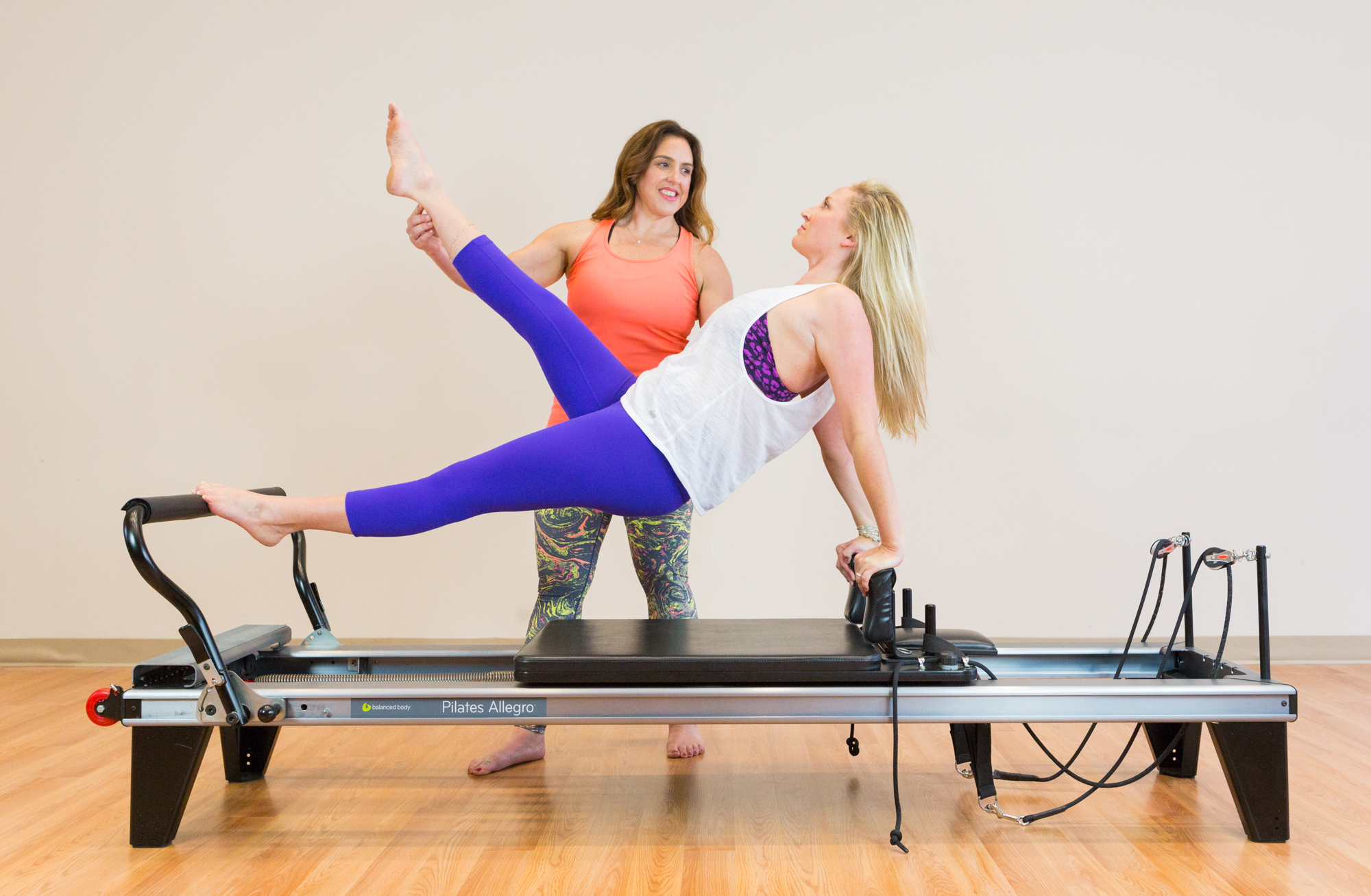
Once your instructor knows your baseline, the real fun begins! They pick the right tools… whether that’s the Reformer, Cadillac, or simple studio props tailored directly to your goals. Yes, the magic really happens in the setup. Say your lower back feels stiff. The plan might lean on pelvic stability and gentle hamstring lengthening. Say you want athletic conditioning. The focus shifts to dynamic core control and deep leg work. Same studio, very different sessions.
Spring tension works like a dial, and so does foot placement. Turn it one way and a different set of muscles switches on, which is why a custom setup matters. Research on reformer training points the same way. A 2025 randomized trial in Medicina followed 57 healthy adults aged 20 to 29. The reformer group trained three times a week for six weeks, starting on low spring resistance, while a control group walked.
The results were modest but clear. The transverse abdominis, a deep core muscle, grew thicker at rest in the Pilates group by 0.06 cm, against 0.01 cm in the walking group. A small change like that shows deep core muscles respond to well-set reformer work. With a setup built around you, you work smarter, not harder, and the endurance you build carries into your daily routine.
4 Ways Pilates Plans Adapt to Different Fitness Goals
Booking a generic workout class when your body has its own list of complaints works about as well as borrowing a friend’s reading glasses. You can technically see, but you’ll be squinting by the end and nursing a headache on the drive home.
A drop-in class tonight would put you on a mat doing burpees next to a twenty-two-year-old who has never once felt a joint. Private Pilates starts from the other end. Your instructor watches how you move and asks where it hurts before deciding what the next hour looks like. Same studio, same equipment, and a session that belongs to you alone.
Every Pilates studio sees the same handful of characters walk through the door. There’s a good chance you’ll recognize yourself in at least one:
- Deep Core Stability (For The One-Trip Grocery Hauler): Say your lower back flares up every time you lift heavy groceries. Your instructor will likely start you on slow breathing paired with small pelvic movements. It feels almost too easy until your deep abdominals start shaking and that shaking is the whole point.
- Full-Body Flexibility (For The Person Who Made Peace With Never Touching Their Toes): Spring-assisted stretching coaxes your hip flexors and chest muscles loose at a pace your ligaments can handle. You might not reach the floor in week one, but you’ll get closer than you have since school.
- Postural Realignment (For The Human Question Mark At The Desk): Your posture has slowly taken the shape of your office chair. Spinal decompression work helps reverse the slouch, and you may find your coworkers asking whether you’ve grown.
- Athletic Performance Conditioning (For The Weekend Warrior With A Weekday Body): You run hard on Saturday and pay for it until Tuesday. Training rotational hip power and single-leg stability means the morning after a run feels like any other morning.
How Instructors Progressively Adjust Your Pilates Plan
Your body naturally adapts as you get stronger… meaning a static workout plan that never changes gets boring and stops working. Whereas, during a private session, your instructor watches your form closely and tweaks it while you’re still on the reformer. It’s like a hiking trail that gets a little steeper as your legs build.
Say an exercise starts to feel easy… then your instructor can lighten the spring support, so your core has to work harder to keep you balanced. A 2024 study in Healthcare found that lower-resistance springs raised core muscle activity on the reformer.
Then there are the off days… or feeling extra fatigued, then your instructor can easily turn the tables towards restorative spine decompression… and yeah, that’s a handy trick. That flexible, step-by-step shift keeps sessions safe, engaging and interesting, while constantly keeping you heading toward your long-term goals.
How to Track Progress During a Private Pilates Transformation Plan
A heavy sweat and a lower number on the scale can be nice, but Pilates progress tends to show up somewhere else first. You’ll notice it in the way you move through an ordinary day, like getting out of the car or reaching for a top shelf. Your instructor keeps an eye on 7 milestones as your plan moves along:
- Movement Quality: Switching from one exercise to the next used to feel like a clumsy shuffle. Now the transitions flow, and you stay in control the whole way through.
- Core Control: You lift your laptop bag off the floor and your abs do the work, with no help from a clenched jaw or hunched shoulders.
- Range of Motion: The bottom kitchen drawer used to be a negotiation. These days you reach it easily, and checking your blind spot while driving doesn’t pinch.
- Standing Balance: Single-leg exercises on the reformer carriage stop feeling like a circus act and start feeling routine.
- Postural Awareness: At 3 pm you notice you’ve slumped toward your screen, and you straighten up before your back has a chance to complain.
- Exercise Tolerance: Your instructor strings together a longer, trickier sequence, and you reach the end still breathing comfortably.
- Personal Goals: You wake up after a full night’s sleep and realize it’s been days since your back hurt. Getting through the day feels easier too, and those wins deserve a celebration.
Is a Customized Private Pilates Plan Right for Your Fitness Journey?
It’s 6:15 on a Tuesday and the evening class is so full your mat is touching the radiator. The instructor is a tiny figure at the front of the room calling out a move you can’t quite see, so you copy the woman in front of you and hope for the best. Halfway through, your hip pinches. Nobody notices, because nobody can!
Classes built for a crowd treat every spine in the room as if it rolled off the same assembly line. Yours has its own past, whether that’s an old sprain or the stress from this quarter’s deadlines. If you’re dealing with a stubborn lower back or returning after an injury, that one-size approach turns every class into guesswork. A customized private Pilates plan replaces the guesswork with a calm studio and an instructor who adjusts the reformer springs and props to match how you’re moving that day.
Somewhere around your third session, things start clicking. Your instructor points out that your left shoulder shoots up every time you think about your inbox. You learn to engage your deep abdominals while still breathing like a normal person, and you leave with a few moves that decompress your spine after a day of video calls.
Start Your Personalized Pilates Journey With Body Cadence!
A workout that leaves you nursing new aches isn’t doing its job. Your body has a story all its own and your plan should read it before it writes a single exercise. Private Pilates starts exactly where you stand today, then moves up a step at a time, so your strength and balance can grow without a fight.
That is exactly why Body Cadence in Toronto offers private sessions centered on you. You’ll train on Balanced Body equipment with an instructor who knows your goals, so you can build core power and move with ease again.
- Constant feedback and form adjustments in every one-on-one session
- State-of-the-art reformers and props that protect your joints while strength builds
- A clean, peaceful studio where you can move at your own pace
- A plan that starts with how you move and grows as you do
- Private sessions starting at $95 per session
Curious to feel the difference a tailored plan makes? Head over to Body Cadence Services to view our private session options, or drop our friendly team an email to schedule your first movement assessment!
Frequently Asked Questions (FAQs)
Q1. How can I create a personalized workout plan?
Begin with an honest evaluation of how well you’re moving right now and whether any old injuries are still acting up. Then get clear on what you want your body to handle day to day, whether that’s chasing a toddler around the park or finishing a half marathon. A certified Pilates instructor can take it from there. They’ll assess your posture and build a step-by-step routine that strengthens your weak spots while keeping your joints completely safe. That beats copying a random workout off the internet, which was written for somebody else’s body.
Q2. What makes Pilates different from other workouts?
Pilates centers on slow, controlled movement and careful breathing, with constant attention to how your spine lines up. That focus trains your deep core and smaller stabilizing muscles alongside the bigger ones most workouts target. It’s also low impact. On the reformer, your instructor can make an exercise easier or harder just by switching a spring, which is how Body Cadence keeps sessions workable whether you’re brand new or have years of practice behind you.
Q3. What is the difference between fitness Pilates and normal Pilates?
If you’ve ever done Pilates at a big gym with music pumping and thirty people on mats, that was most likely fitness Pilates. It takes moves from the Pilates repertoire and speeds them up with cardio-style mat work, so you’ll sweat plenty, though the instructor probably won’t get to your corner of the room to check your form. Studio Pilates feels different the moment you walk in. You’ll use equipment like the reformer and Cadillac, and the slower pace leaves room for precise spinal alignment and movements adjusted to your body.
Q4. Can you suggest a workout plan that incorporates Pilates?
Your week could look something like this. Two or three days belong to Pilates. A couple more go to walks or bike rides, one goes to strength training, and rest days sit between the tougher ones. Then nudge the mix toward whatever you’re chasing. Let a private session at Body Cadence handle the Pilates part, and your core and posture will hold up through everything else on your calendar.
